Universal Content
Klaviyo / Product design
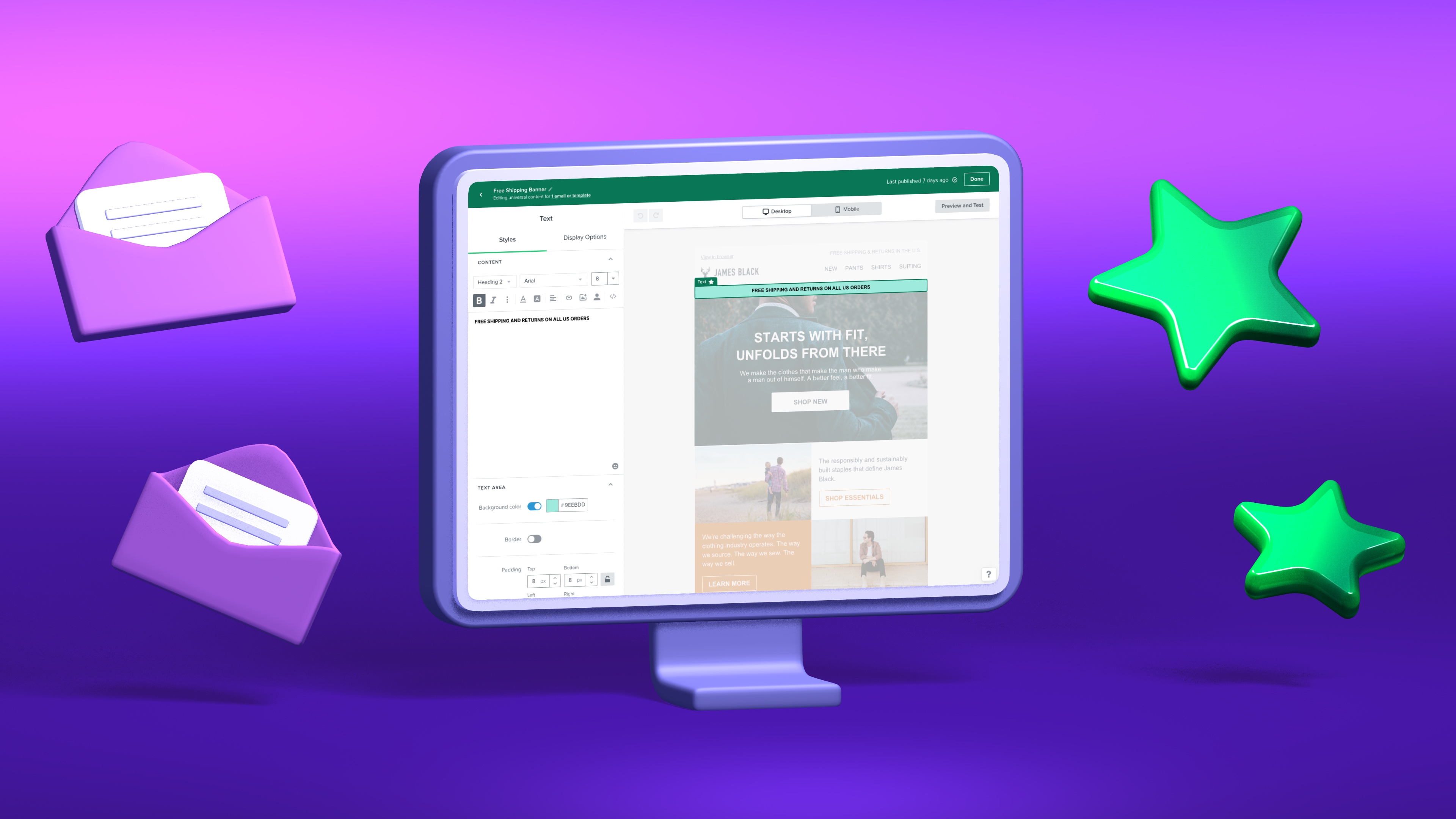
Helping marketers see which emails a shared edit will change, and decide when to apply it.
Every copy became another update
Klaviyo encouraged marketers to build segmented automations, with different messages based on cart value, purchase frequency, and more. That multiplied the work of keeping emails consistent. Saved Content added an unlinked copy to each message, so updating a shared element meant editing every email by hand. It also made it difficult to add time-sensitive promotions to automations already running.
Universal Content would link that content across messages. The design challenge was helping people understand when a single edit would change more than the email in front of them.
One builder, several products
The content builder was shared by Email, Forms, and SMS. We had to work within its existing interaction methods and overall structure. A separate editing mode gave shared content a distinct state inside the builder customers already knew.
Looking beyond email
Sara Reich and I shared responsibility for research, testing, naming, and Design Systems alignment.
Synced content was rare in the email editors we researched. We looked at website builders, where styles carry across pages, and creative tools such as Sketch and Figma, where one component can have many instances. I wanted to see how they showed which content an edit would affect before someone committed it.
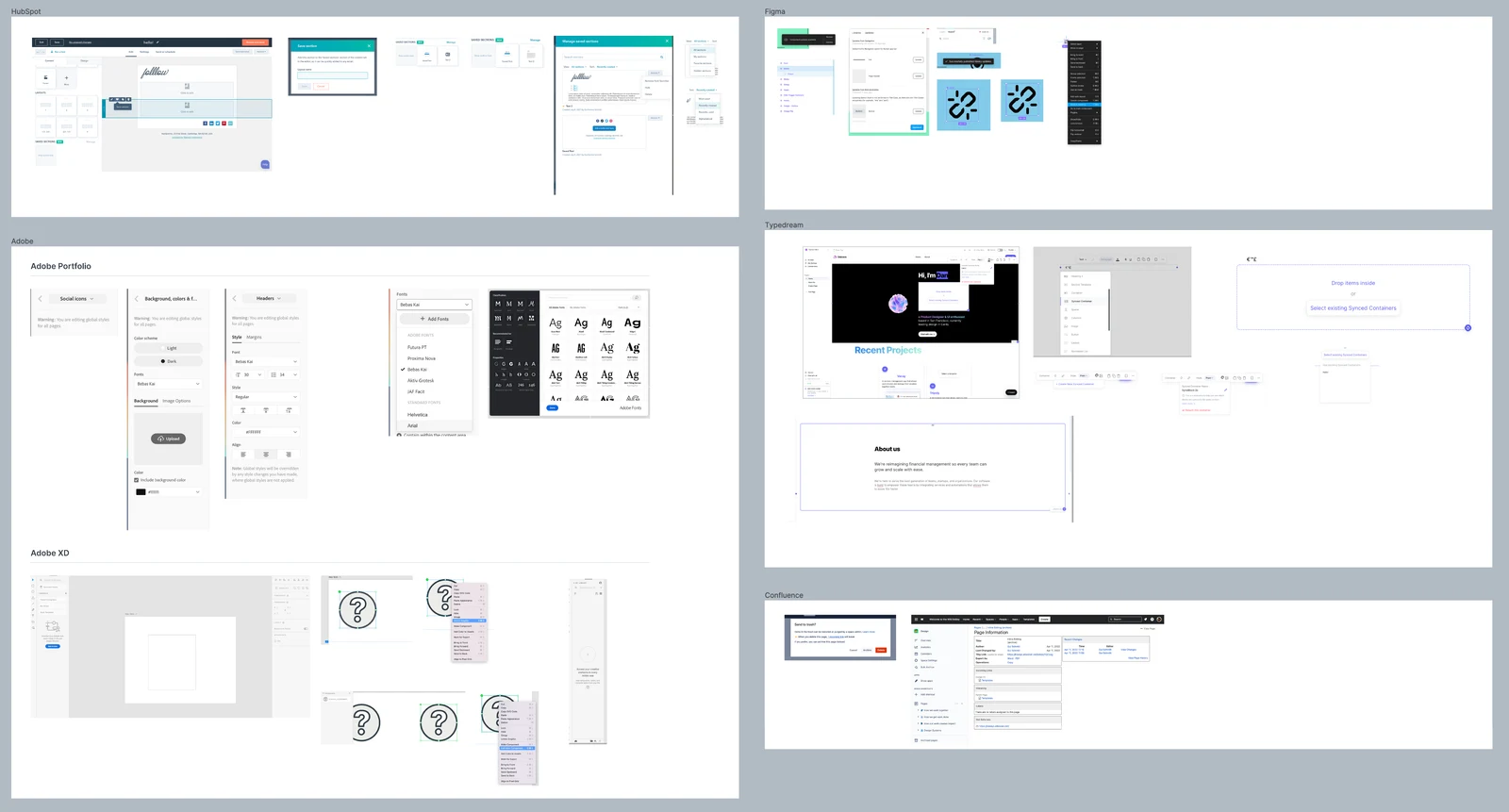
Photos on the Mac offered another reference: switching the interface into a dark editing mode made the change of state clear.
Customers needed more than an explanation
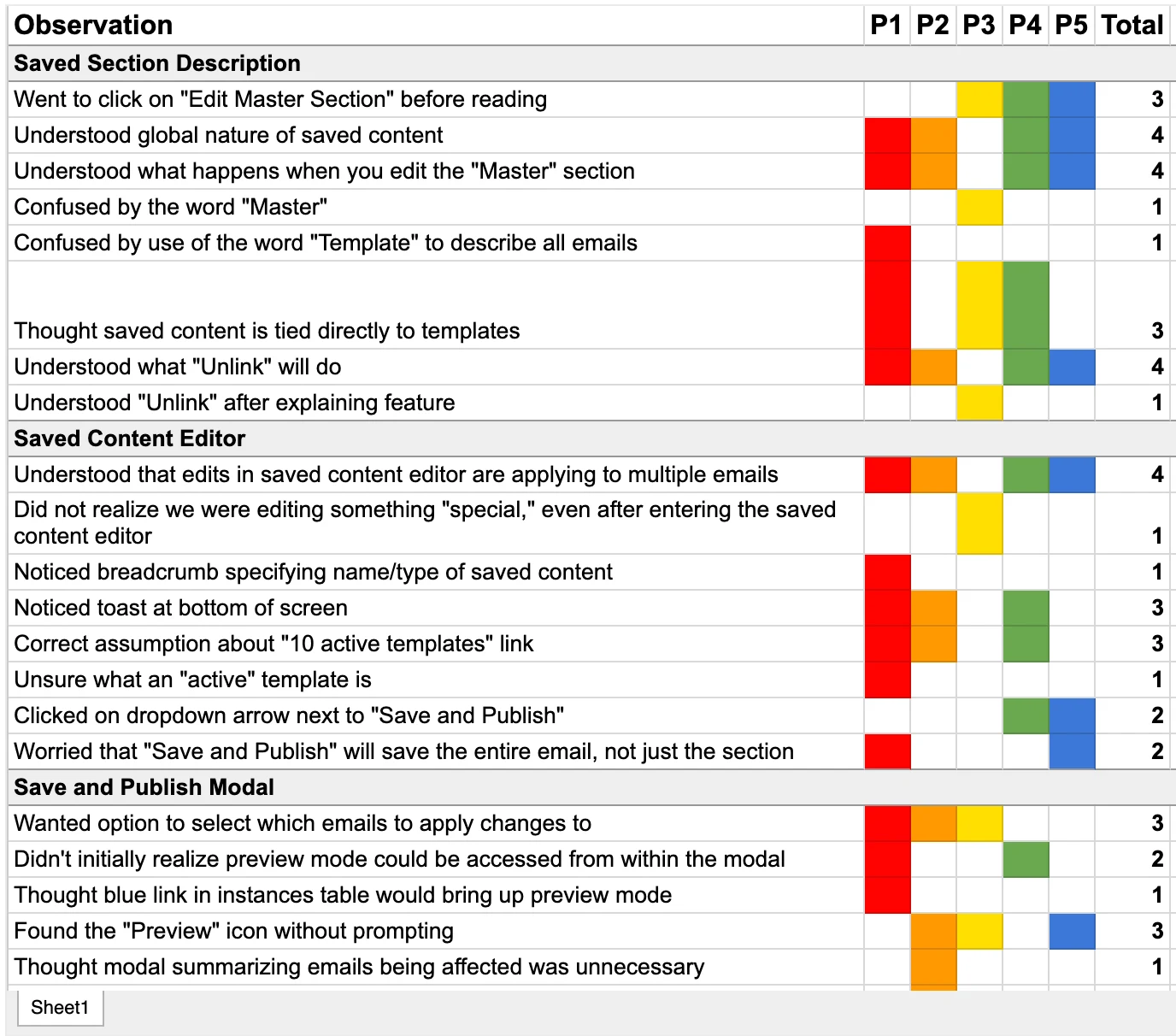
In Sara Reich’s 2020 tests, three of five participants thought saved content was tied directly to templates. That made the distinction between editing one email and updating shared content especially important.
We tested early concepts with customers who already used Saved Content. Some understood the benefit, but others moved past the explanatory copy. The shared editing mode needed stronger visual cues and a clearer hierarchy. Customers also missed seeing the original email while editing a shared block.
Naming had to explain the change
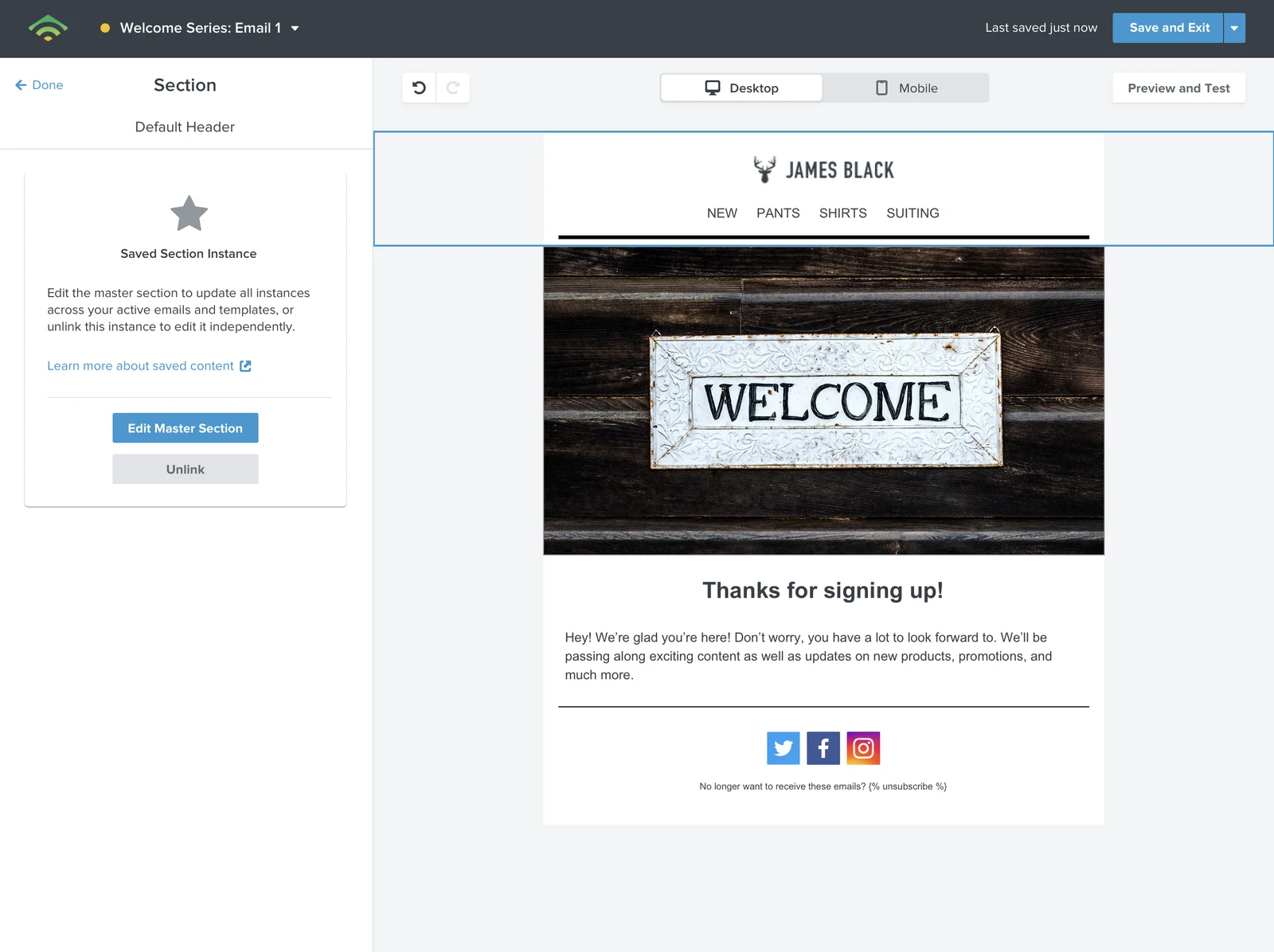
“Saved” described the old behavior but did not communicate syncing. “Master,” used in the early prototypes, was confusing and carried connotations we wanted to avoid. We chose “Universal Content” to make the shared behavior explicit.
Making the editing mode unmistakable
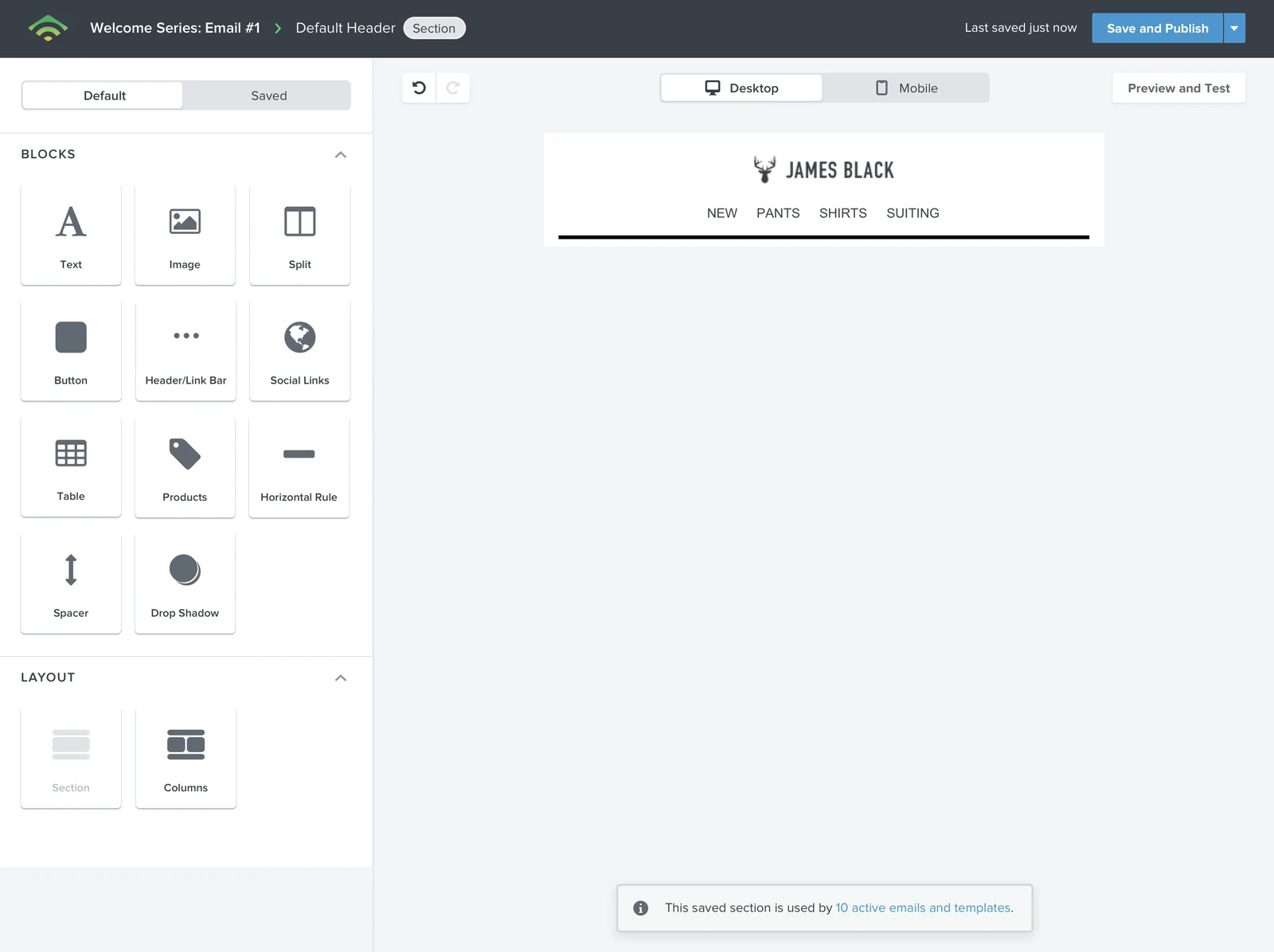
We explored three ways to signal that an edit would affect shared content: an additional header, a replacement header, and a floating toolbar.
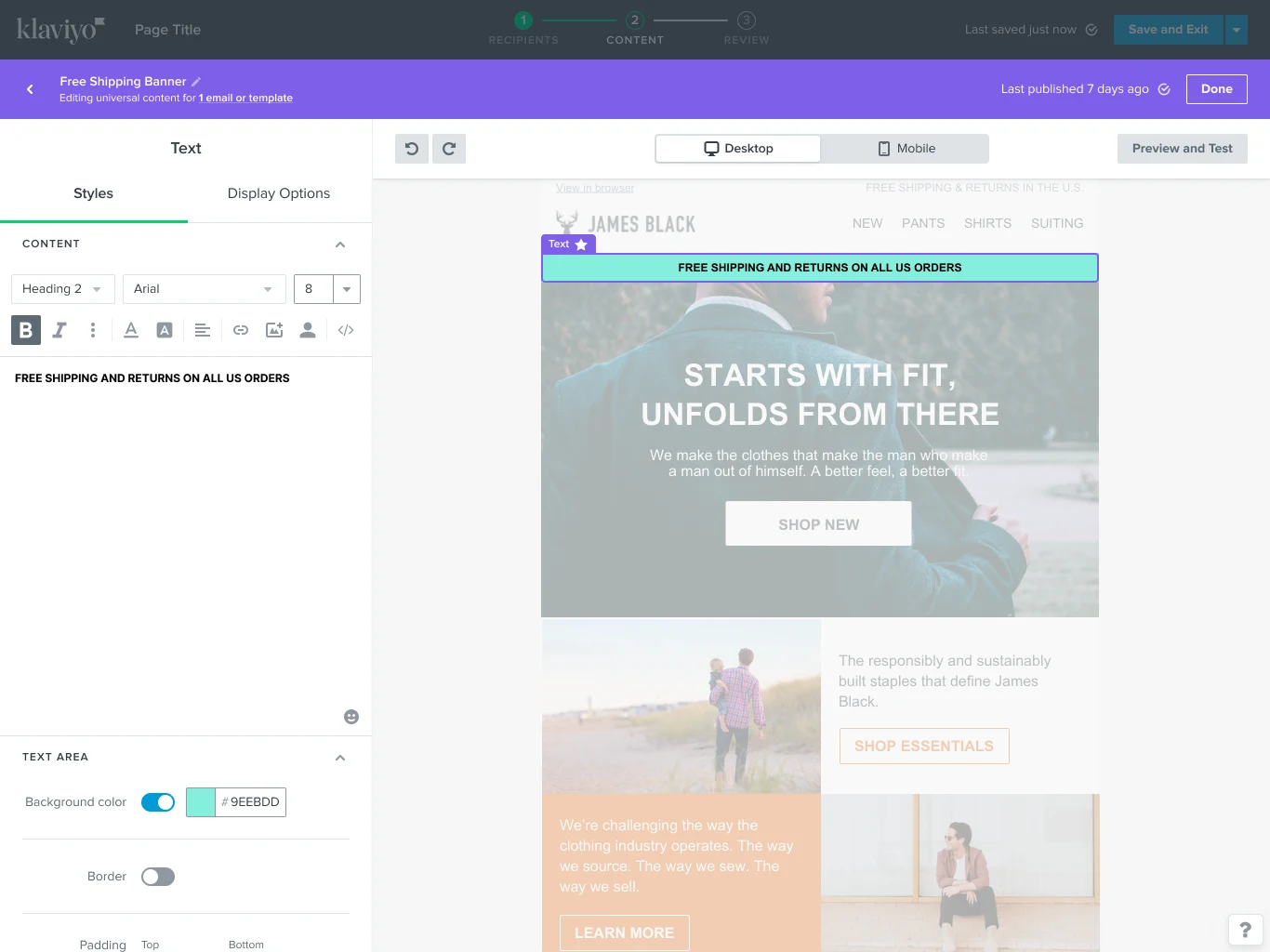
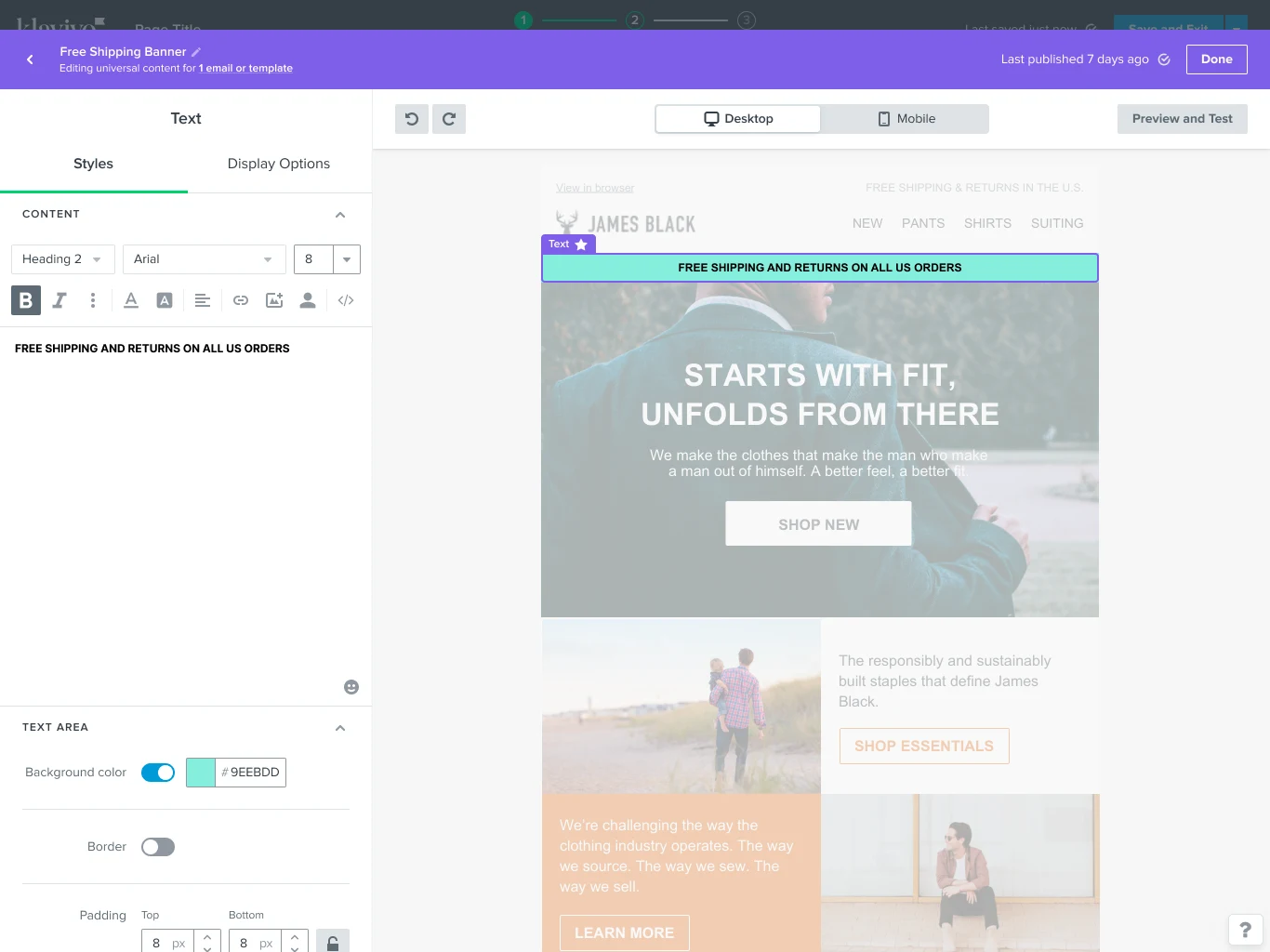
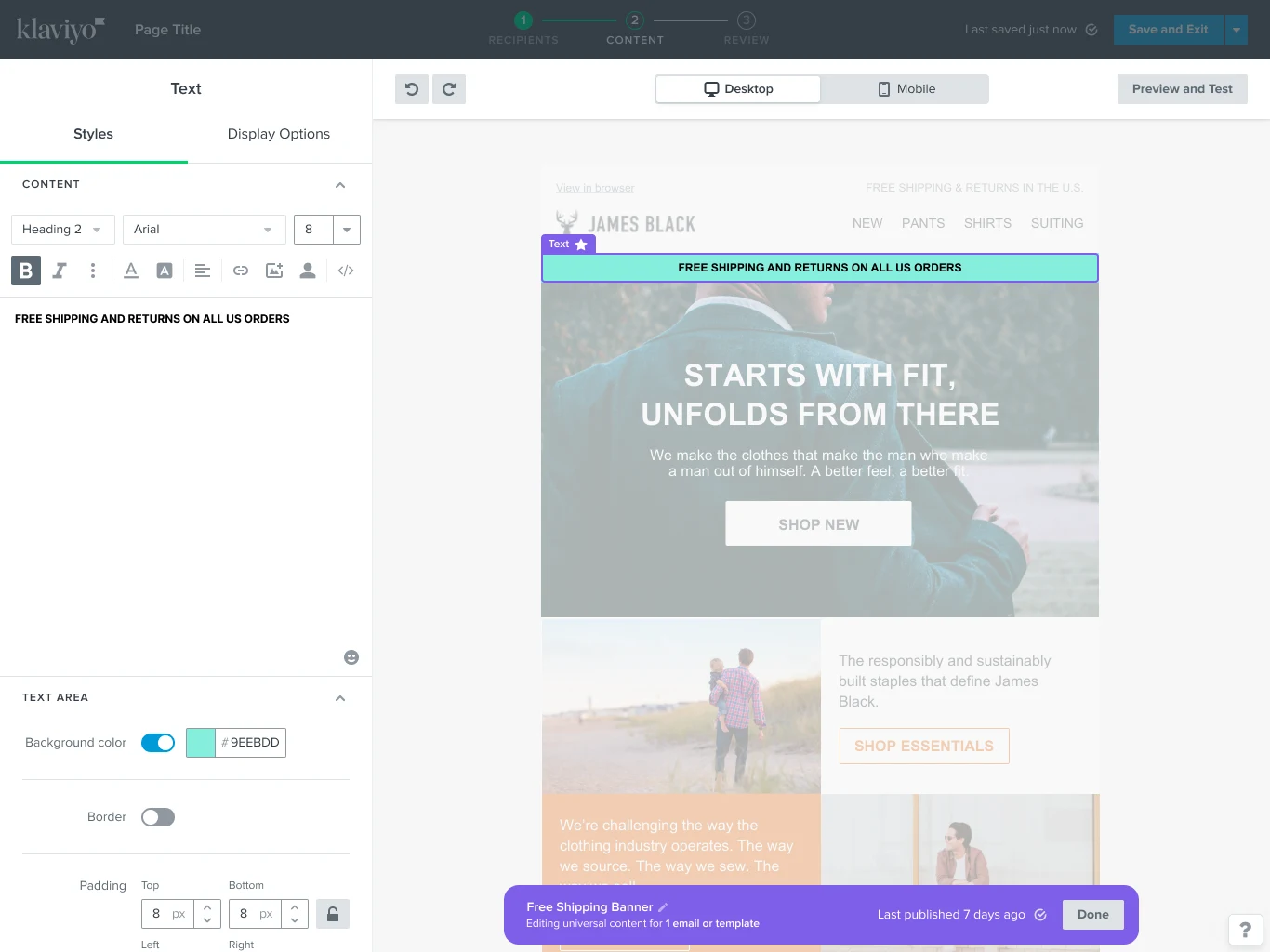
We chose the replacement header. A similar pattern had worked internally to signal staff account access and the need for careful data handling.
We wanted the transition to be clear without disorienting people. Replacing the bar gave shared editing its own hierarchy, while leaving the original email visible at reduced opacity addressed the context customers had missed in testing.
Green had a job in the design system
We initially explored purple, inspired by Figma’s treatment of components. Klaviyo’s AI-generated content features already used that color. After talking with the Design Systems team, we chose green to distinguish shared editing.
The shipped experience
Explain the choice before the edit
Before their first shared edit, customers saw an animation explaining the concept. The action labels distinguished editing every instance from unlinking a block to edit it independently.
Keep the scope visible throughout
The green header names the mode and shows how many messages use the block. The surrounding email stays visible but dimmed, so customers can place their edits in context.
Make saving and backing out explicit
Before confirming, customers can see how many messages will receive the update. Clear save and discard paths let them finish the shared edit or leave without applying changes.
A reason to move to the new builder
Universal Content was exclusive to the new email builder, giving customers another reason to migrate. As Klaviyo pushed further into enterprise, customers managing large volumes of messages responded particularly well to Universal Content.
Universal Content remains part of Klaviyo’s email editor in 2026.
Conor
@conorgallagh ·
Klaviyo's new email editor is worth the effort to learn how to use - looks much much better on mobile and the universal blocks feature is an absolute game changer. You can adjust a block or section of blocks in every email it's featured in - at once. Highly recommend.View Conor’s original post ↗
Ben Zettler
@benzettler ·
We've been in the process for the last two months of converting client emails to Klaviyo's new editor. Having clamored for Universal Content Blocks for years, seeing it all in action now is just... 🤌 pic.twitter.com/fyOtGRn7hIView Ben Zettler’s original post ↗
Looking back
Help a growing library stay manageable
I’d explore favorites, tags, and folders as the library grows. Reusing content is less useful if customers can’t find the block they need.
Understand when people choose an independent copy
Early adoption fell short of our 20% target, and customers were choosing to unlink content. I’d look more closely at those moments to understand when an independent copy better suited their work.
Build trust through visible control
I carry the editing-mode lesson into my AI work today. Before someone accepts a change, they need to know what else it affects. I’d rather make that step explicit than have them miss it.